Style
There's a moment, you've felt it if you've spent any time on the road when you walk into a place that shouldn't work anymore and it works anyway. A diner that never updated its menu since 1974. A bar with a jukebox that only plays vinyl. That's what it feels like walking into a resale shop in Texas right now, except the diner is the whole state, and the menu is denim, pearl snaps, and boots that have already walked more miles than you ever will.
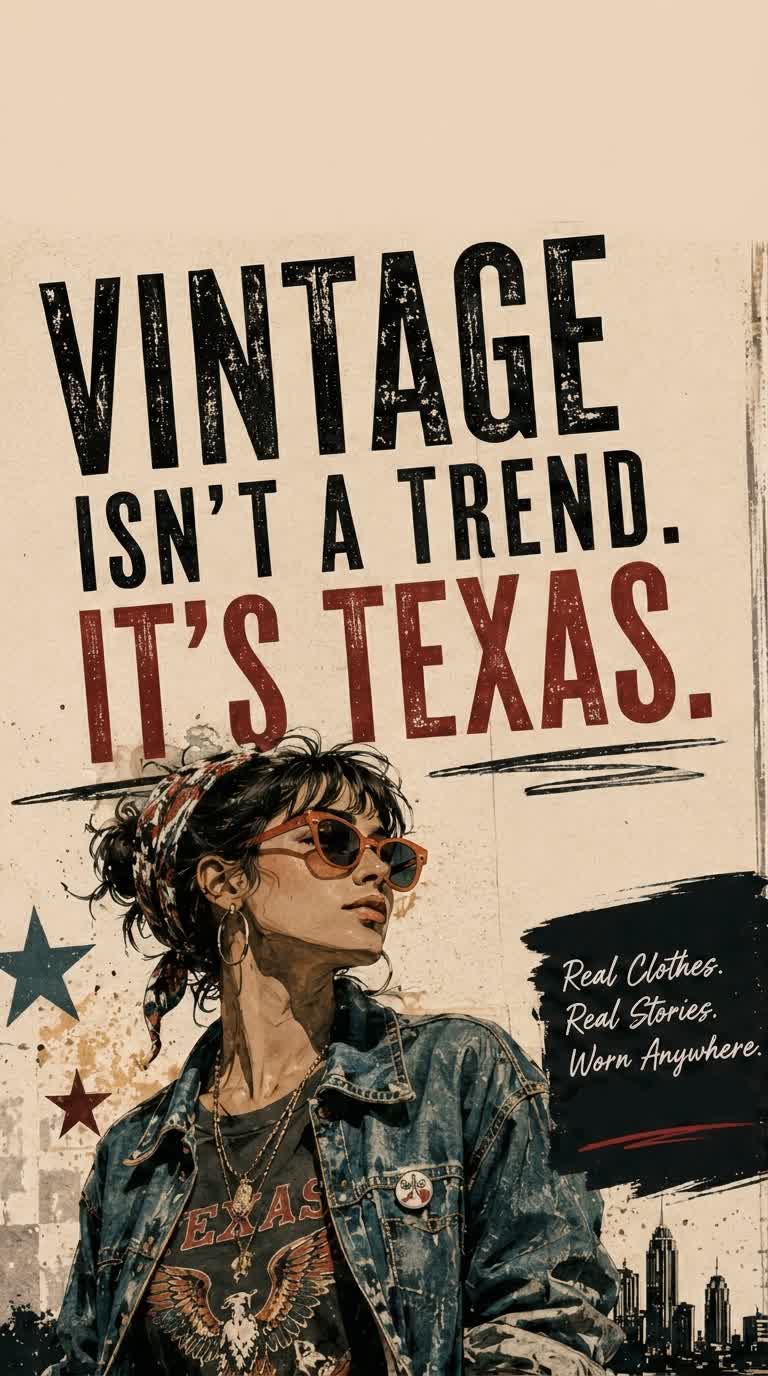
Texas doesn't do "vintage" the way Brooklyn does vintage. Nobody's ironic about it here. Nobody's wearing a bowling shirt as a joke. When a twenty-four-year-old in Austin buys a 1980s Wrangler jacket off a rack in a converted feed store, she's not cosplaying anything. She's buying back something that was never really gone, just misplaced for a generation, sitting in somebody's grandfather's closet in Lubbock, waiting.
That's the thing about this so-called comeback. It's not a comeback. It's a homecoming.
Go to Marfa, yeah, I know, Marfa, that dusty little art world Vegas in the middle of nowhere that somehow has better coffee than most of Manhattan and you'll find kids in $40 thrifted Justin ropers standing next to $4,000 art installations, and somehow neither one looks out of place. Go to the Round Top antiques fair, that twice-a-year fever dream where half of America's interior designers descend on a town with a population smaller than a decent wedding, and you'll see actual grown adults fistfighting politely, this is still Texas, over a rack of Fifties gabardine western shirts with embroidered roses on the yoke.
There's a whole ecosystem now. Houston's got its resale warehouses the size of airplane hangars, staffed by kids who can tell you the difference between a Sixties Levi's Big E tag and a fake at twenty paces. Dallas has boutiques where a beat-to-hell pair of Tony Lama boots, the leather gone the color of a bourbon you'd actually want to drink, sells for more than a new pair, because new doesn't have forty years of somebody's actual life worked into the creases.
And here's what nobody tells you: this isn't nostalgia. Nostalgia is soft. This is something harder, more useful. In a state that invented the phrase "big hat, no cattle" as an insult, wearing something real, something that belonged to somebody, that survived a few decades of weather and work and Saturday nights is a way of telling the truth. You can buy a brand-new pearl-snap shirt at any mall in Texas. It'll fit fine. It'll mean nothing. The vintage one, the one with the sun-faded shoulders and someone else's sweat still ghosted into the collar, that one's got a story already running before you even put it on.
Maybe that's the whole appeal, in a world of fast fashion built to fall apart in a season. Texas never stopped making things meant to last, boots, trucks, grudges, and now it's just catching up to its own closets. The kids buying up their grandparents' Wranglers aren't chasing a trend. They're doing something closer to archaeology. Digging up proof that people were living loud, working hard, and dressing sharp long before anybody thought to put a hashtag on it.
So no, it's not a trend. Trends end. This is just Texas, finally admitting it never actually let go.