
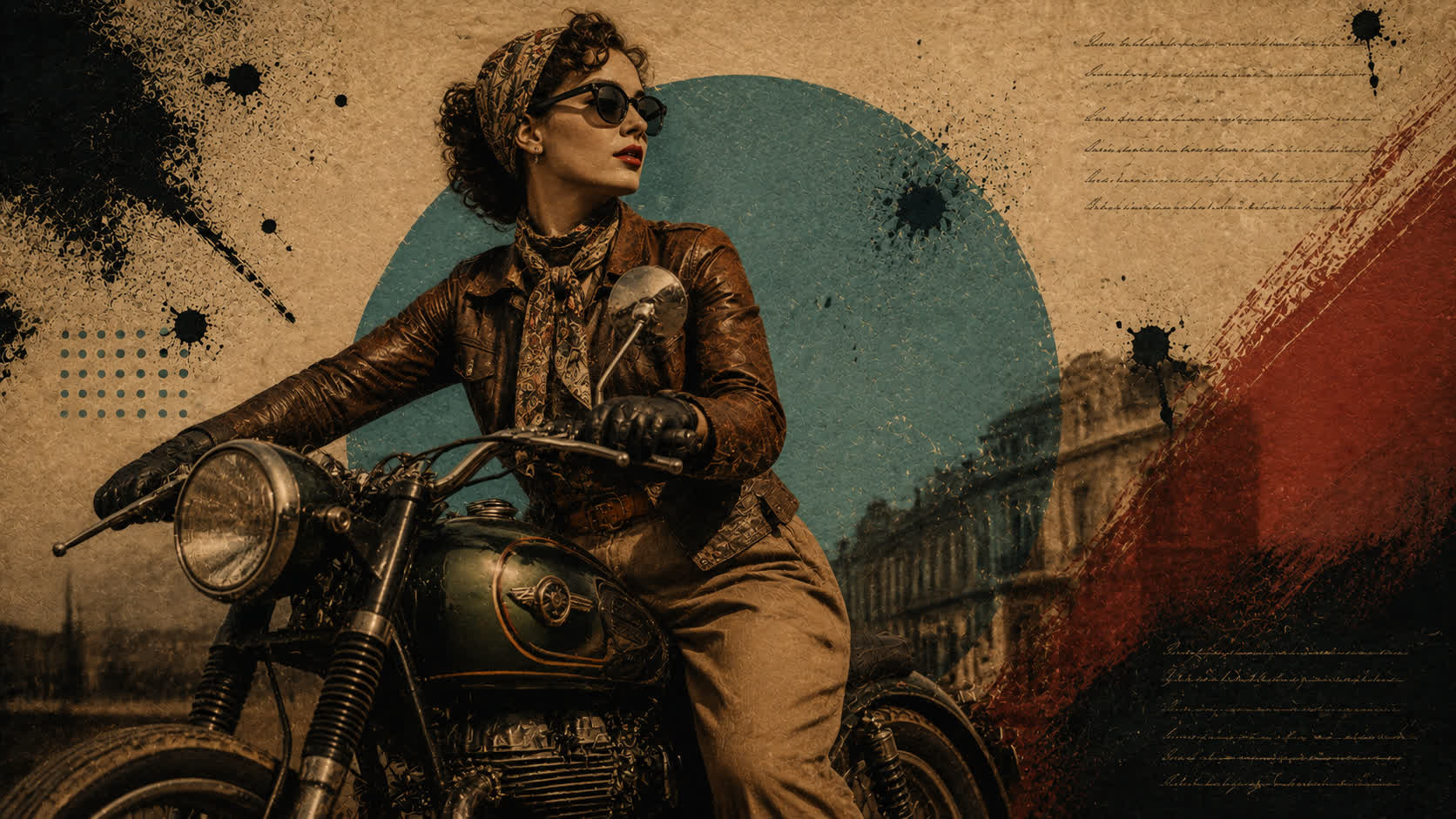

Vintage, Reimagined:
Texas Joins the Global Fashion Revival
In a state celebrated for its boldness, Texas is quietly refining its fashion narrative. Across Dallas, Houston, and Austin, a new sartorial movement is taking hold: the reemergence of vintage style, elevated beyond nostalgia into the realm of cosmopolitan luxury.
At first glance, vintage fashion might seem like a nod to the past. But here, it’s anything but retrograde. “The new approach to vintage is about curation,” says Elena Morales, owner of a high-end Houston boutique specializing in archival pieces. “It’s not about dressing in costume—it’s about weaving timeless craftsmanship into a modern wardrobe. When done right, it feels less like looking back and more like reimagining forward.”
STYLE & FASHION
Worn In, Not Worn Out
Why vintage fashion is finding a new life in Texas
Vintage clothing arrives with evidence. Softened denim. Frayed cuffs. Sun-faded cotton. Leather shaped by somebody else’s miles. These clothes have already lived, and Texans understand the appeal of anything that has taken a few hits, collected a good story, and kept going.
REAL STYLE IS NOT FOUND ON A RACK MARKED ‘NEW ARRIVALS.’
STYLE & FASHION
Worn In, Not Worn Out
Why vintage fashion is finding a new life in Texas
Here is the thing about Texas. Everybody thinks they know what it looks like.
Cowboy hats. Pearl snaps. Snakeskin boots. Enough turquoise to decorate a small casino. You arrive expecting a costume, but what you find is a closet. A real one. Dusty, enormous, and packed with the lived-in history of a state that has never cared much about following somebody else’s dress code.
Walk into a vintage shop in Austin, San Antonio, Dallas, or some half-forgotten downtown square and you will see it happening. A twenty-two-year-old carefully examines the stitching on a 1978 Wrangler jacket with the concentration of a surgeon. A musician tries on a faded shirt that appears to have survived three breakups, two bar fights, and at least one Willie Nelson concert. Nearby, someone discovers a pair of boots that fit as though they have been waiting forty years for the right feet.
This is not nostalgia. It is not a costume party. Nobody is trying to dress like an extra from an old Western, although in some Texas bars that distinction can become difficult to make after midnight.
Vintage fashion is a quiet rebellion against an industry that wants us to buy something new every six weeks, wear it twice, photograph it once, and forget it ever existed. Fast fashion moves at the speed of social media. By the time your package arrives, someone online has already declared it outdated and is attempting to sell you pants large enough to shelter a family of four.
Vintage clothing refuses to cooperate.
It arrives with evidence. Softened denim. Frayed cuffs. Sun-faded cotton. Leather shaped by somebody else’s miles. These clothes have already lived, and Texans understand the appeal of anything that has taken a few hits, collected a good story, and kept going.
Yes, sustainability matters. Buying vintage keeps clothing out of landfills and reduces the demand for disposable fashion. That is important. But most people do not fall in love with an old jacket because someone cornered them at brunch and delivered a lecture about textile waste. They fall in love because the jacket is cool. Because nobody else at the bar will be wearing it. Because it feels honest.
Texas has always had a complicated relationship with fashion. We like nice things, but we are suspicious of anything too polished. If an outfit looks as though it requires a personal assistant and three hours of standing perfectly still, it probably will not survive a plate of barbecue.
We appreciate craftsmanship. We respect objects made to last. A hand-tooled belt, a sturdy pair of boots, or a perfectly broken-in denim jacket carries more authority than a luxury logo printed across someone’s chest in letters visible from Oklahoma.
There is also the thrill of the hunt. Vintage shopping requires patience, curiosity, and a willingness to dig through several questionable decisions from 1986. You may encounter shoulder pads with their own gravitational pull. You may find a polyester shirt in a color best described as “expired mustard.” But then, hidden between somebody’s old bowling uniform and a Christmas sweater featuring an alarmingly muscular reindeer, you find it.
The piece.
It fits. It has character. It costs less than dinner. Suddenly, you are not shopping. You are rescuing history.
The best vintage style in Texas is not about dressing like the past. It is about taking pieces from the past and making them answer to the present. A Fort Worth rodeo shirt with tailored trousers. A seventies leather jacket over a clean white dress. Old military pants with handmade jewelry from a local artist. A faded band shirt worn by someone who may or may not know any of the band’s songs.
The combinations are personal, imperfect, and nearly impossible for an algorithm to duplicate.
That may be the real reason vintage is returning. Modern fashion has become painfully predictable. We are all shown the same trends, sold the same silhouettes, and encouraged to express our individuality by purchasing the exact same beige jacket.
Vintage breaks the pattern.
It gives people permission to experiment. It also connects generations in a way new clothing rarely can. A pearl-snap shirt might remind someone of a grandfather who wore one to every family gathering. A beaded evening bag may look like the one a grandmother carried when she went dancing downtown. These objects hold memories, even when the new owner does not know the original story.
In Texas, that history matters. Style here has always been shaped by movement, music, work, immigration, rebellion, heat, and the practical need to make it through August without dissolving on the sidewalk.
Vintage allows Texans to wear those influences without becoming trapped by them. The result is not retro. It is something more interesting. It is personal style with a past and enough confidence to ignore the present trend cycle.
Because real style is not found on a rack marked “New Arrivals.”
Sometimes it is buried in the back of a thrift store, smelling faintly of dust and somebody’s grandmother’s Chanel No. 5, waiting patiently for another life.