
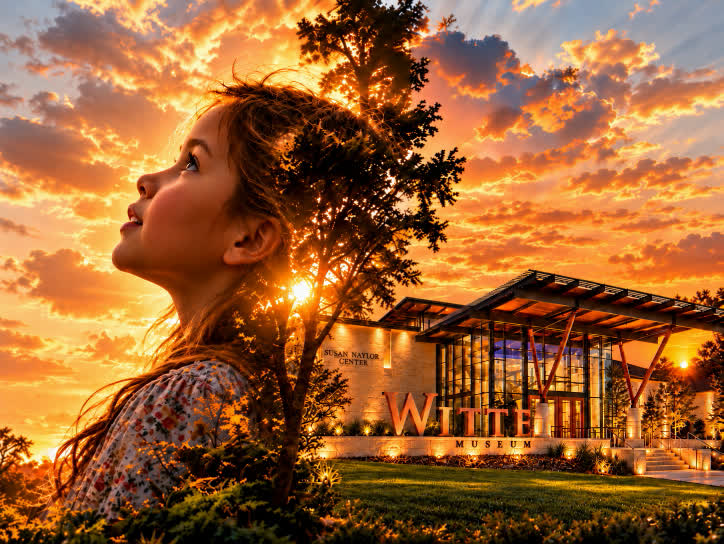
There was once a little girl who spent her summers exploring the Witte Museum with her grandmother.
Her grandmother was a teacher, and when school let out for the summer, she had something particularly valuable to offer her grandchildren: time. While their parents worked, she brought them to a place where the natural world, Texas history, and the mysteries of science existed beneath one roof.
There were enormous bison that inspired equal parts excitement and apprehension. There were exhibitions filled with things the little girl had never encountered before. And there was something called the black hole, a simple exhibit where a coin could be set spinning, demonstrating the principles of physics in a way that seemed almost magical to a child.
She loved that black hole.
Years later, when she returned to the museum for a job interview, she had one question.
Was it still there?
It was.
And it remains there today.
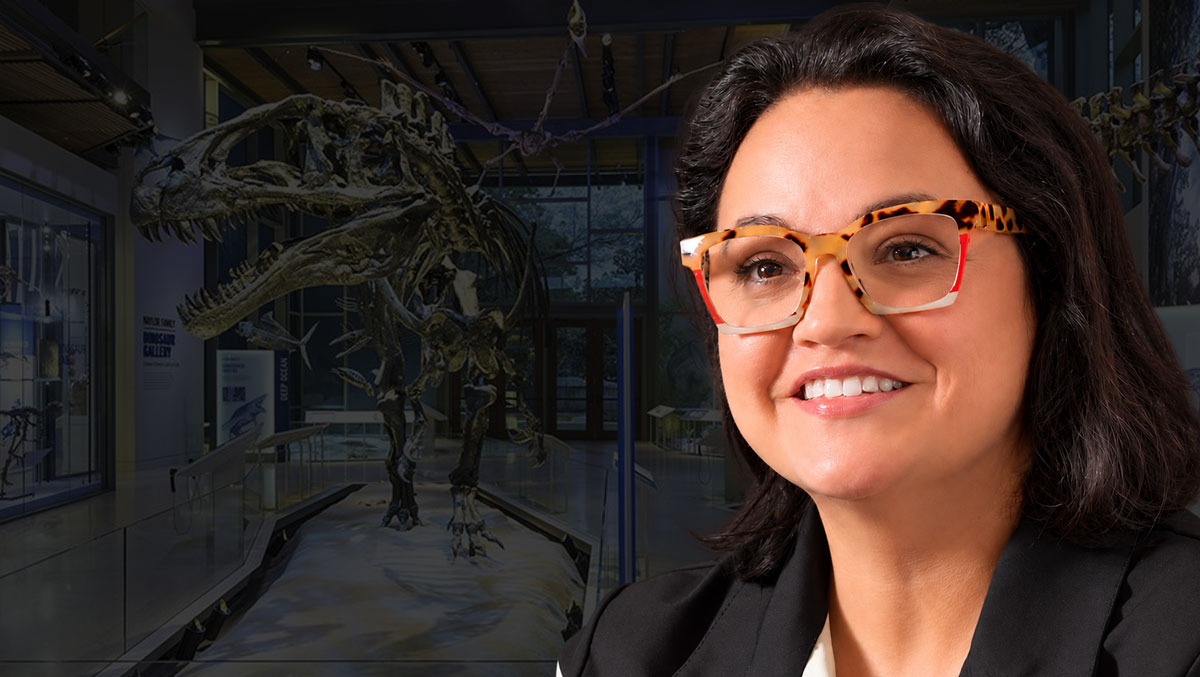
That little girl was Dr. Michelle Cuellar Everidge, now President and CEO of the Witte Museum.
As the institution celebrates its 100th anniversary, the woman entrusted with leading it into its next century carries something no collection or exhibition could have given her: the memory of experiencing it first as a child.
Perhaps that is where the real story of the Witte begins.
Not with a building, a collection, or even a date in history.
But with a grandmother taking a little girl somewhere wonderful.
The Places That Become Part of Us
There are places we visit, and there are places that become part of who we are.
The distinction is not always apparent while we are experiencing them.
A family outing on an ordinary afternoon rarely announces itself as a memory worth keeping. Children grow, routines change, and the places we once visited become part of a larger collection of experiences that shape our understanding of home.
But occasionally, a place remains.
For generations of San Antonio families, the Witte Museum has been one of those places.
Dr. Everidge describes hearing from visitors who remember coming as children, returning with their own children, and eventually introducing their grandchildren to the same galleries.
The museum, she explains, becomes part of the rhythm of their lives.
Family traditions rarely begin with the intention of becoming traditions. They begin simply because someone decides to go somewhere, and someone else decides to take them again.
I understand this connection personally.
For years, our family held a membership to the Witte Museum. Our son, Alexander, loved spending time there. Long before I considered the museum's significance to Texas history, I understood the place it held in our family's own story.
Those visits were not occasions we thought to preserve as history.
We were simply living them.
And perhaps that is one of the more extraordinary things about a museum celebrating a century of existence. While the institution carefully preserves the past, generations of families are quietly creating memories within its walls.
The exhibits may change. The children grow older. Grandparents become the keepers of stories once told by their own parents.
Yet the museum remains a familiar point of connection between them.
Dr. Everidge calls it a rite of passage.
One that has now extended across generations.
What We Leave Behind
Museums are often understood as places that preserve objects.
A fossil. A painting. An artifact recovered from the earth. A possession belonging to someone whose lifetime ended long before our own began.
But objects are only part of the story.
What about the things we cannot place behind glass?
The smell of a grandmother's kitchen. The sound of relatives gathering around a dinner table. A recipe prepared so many times that no one remembers who first wrote it down.
These are the less tangible elements of human history, the customs and connections that give ordinary objects their meaning.
Dr. Everidge believes museums have an important role in preserving them.
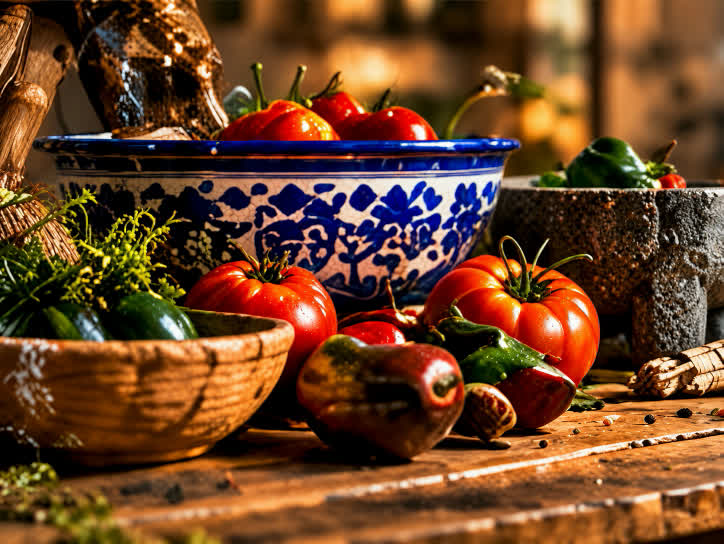
The Witte's exhibition, Gather Around the Table: Texas Food Traditions, explores this very relationship between food, culture, and memory.
As she explains, a plate of food disappears at the end of a meal, but the memories surrounding it remain.
The traditions associated with preparing, sharing, and enjoying that food become part of a family's identity.
And when those traditions are shared through exhibitions, photographs, artifacts, and personal stories, they reveal something much larger than a recipe.
They reveal how people lived.
How they gathered.
What they valued.
And what they chose to pass along.
In a state as culturally layered as Texas, these stories are especially meaningful. Our collective history is not represented by a single experience, but by countless families whose traditions, migrations, celebrations, and everyday lives have contributed to the place we call home.
A museum can preserve the evidence of those lives.
More importantly, it can encourage us to recognize their significance.
A Million Years Beneath Our Feet
There is something particularly fascinating about the way the Witte connects the deeply personal with the almost unimaginable.
One moment, a visitor might be considering the cultural history of a familiar Texas meal.
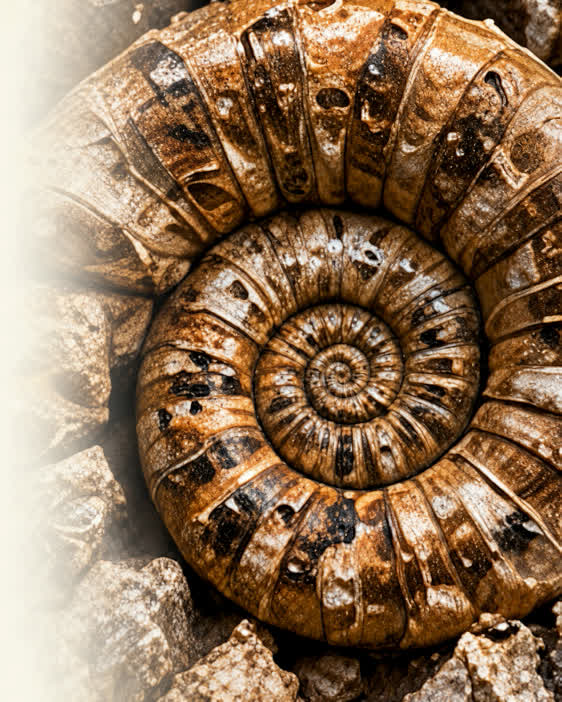
The next, they may be standing before evidence of creatures that traveled across this landscape millions of years before human beings arrived.
Dr. Everidge, a historian by training, admits that paleontology has been among her most surprising discoveries since joining the museum.
She describes learning about the Acrocanthosaurus, a prehistoric predator whose footprints were preserved in what is now Government Canyon.
From those ancient impressions, scientists can begin reconstructing details about the animal's movement, weight, and behavior.
A footprint becomes evidence.
Evidence becomes a question.
And the question becomes the beginning of a story.
For Dr. Everidge, the process is not entirely different from the work of a historian.
A small artifact may reveal something about the person who made it, the family who owned it, or the journey that brought it to Texas.
Both disciplines begin with traces of the past.
Both require curiosity.
And both ask us to consider how much can be learned from something that might otherwise be overlooked.
Millions of years separate the dinosaur whose footprints remain in Texas limestone from the families whose recipes are preserved in museum exhibitions.
Yet both have left something behind that allows another generation to ask:
Who was here before us?
And what can their story teach us?
A Museum Raised by a City
A museum doesn't reach its hundredth birthday simply by keeping its doors open.
It survives because generations of people continue to believe that what happens inside matters.
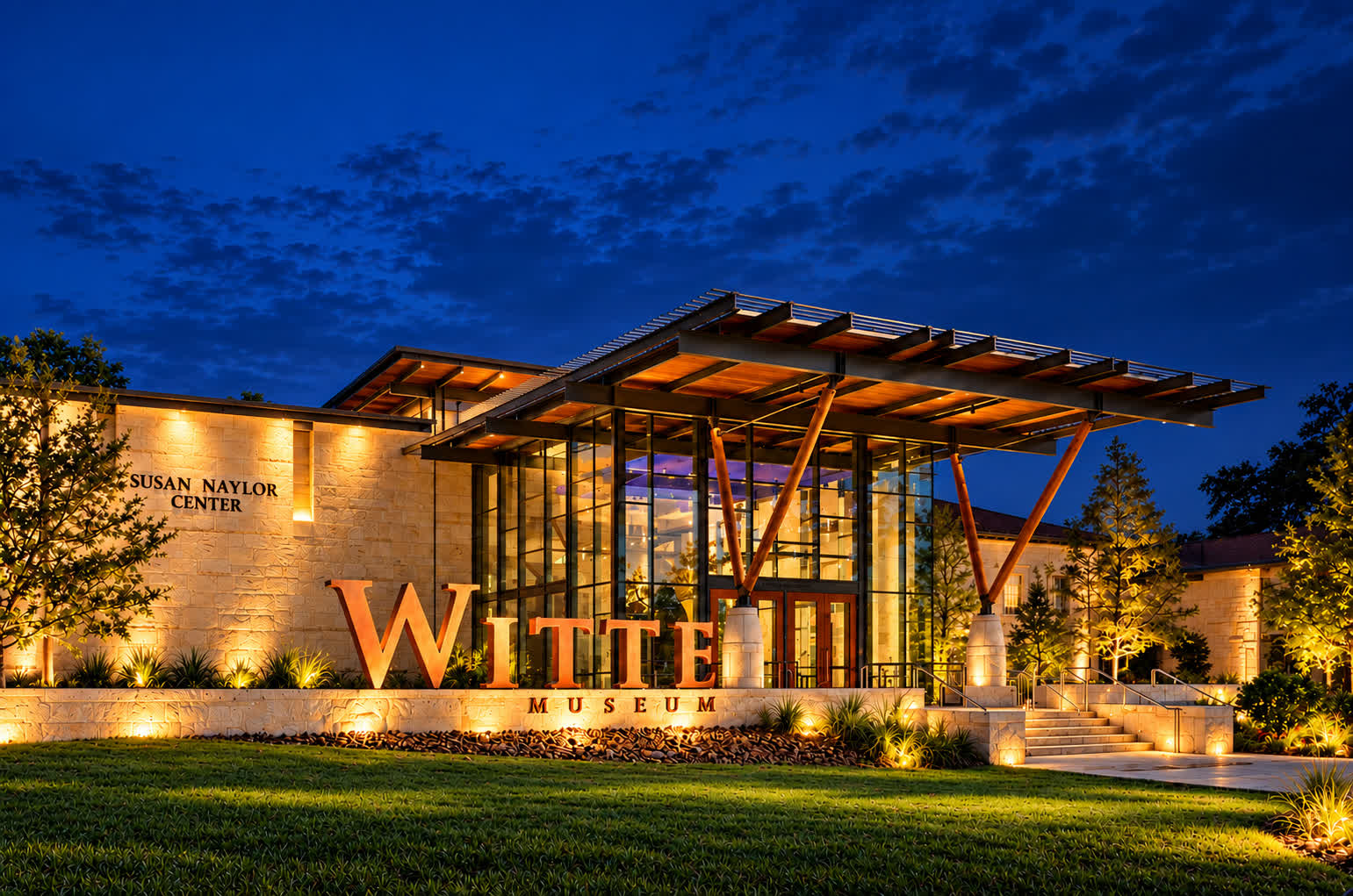
Since opening in 1926, the Witte Museum has grown alongside San Antonio, evolving from an institution dedicated to sharing natural history and cultural collections into a place where science, history, and the stories of Texas come together.
But a century of history does not happen by accident.
Institutions survive because people continue to find meaning in them. They evolve because communities change, and because each generation must decide what is worth preserving and what deserves to be discovered.
For Dr. Everidge, the Witte's future is inseparable from the people it serves.
It is a wonderfully human way to describe an institution of such scale.
Behind the galleries and exhibitions are generations of educators, researchers, trustees, volunteers, supporters, and visitors who have helped shape the Witte into what it is today.
And the museum has grown alongside San Antonio.
As the city expanded, so did the expectations placed upon its cultural institutions.
The Witte evolved to accommodate more visitors, develop new educational opportunities, and bring exhibitions from around the world to South Texas.
The transformation unveiled in 2017 marked a significant chapter in that evolution.
Dr. Everidge encourages anyone who has not visited since then to return, explaining that they will discover an entirely different museum from the one they may remember.
But growth, she suggests, is not simply a matter of larger spaces or more ambitious exhibitions.
It is a matter of remaining relevant to the community.
And for Michelle, that responsibility carries a particularly personal meaning.
The museum she once explored as a child is now the institution she helps guide into its next century. The sense of wonder that brought her through its doors with her grandmother is the same experience she hopes future generations will discover for themselves.
The next hundred years will require the same commitment that sustained the first.
Not merely preserving what the Witte has been, but remaining curious about what it can become.
The Courage to Be Curious
Perhaps one of the most compelling observations Dr. Everidge makes about the museum's future has little to do with the past.
It concerns the way we learn.
We live in an age when answers are available almost instantly.
Questions that once required research, conversation, and investigation can now be answered with a few words typed into a screen.
But having access to information is not necessarily the same as understanding it.
Dr. Everidge believes museums offer something increasingly valuable: the opportunity to encounter evidence, examine it, ask questions, and follow those questions wherever they lead.
Sometimes that process means discovering that an earlier assumption was wrong.
Sometimes it means beginning again.
And sometimes it means realizing that the most interesting discovery is not the answer itself, but the question that led us there.
She speaks of the importance of giving people the courage and confidence to continue learning throughout their lives.
It is an idea that extends well beyond the museum.
Curiosity requires a willingness to admit that we do not know everything. It asks us to observe before concluding, to consider unfamiliar perspectives, and to remain open to the possibility that the world is more complicated and more interesting than we initially imagined.
These are skills that cannot be replaced by simply having information available.
They must be practiced.
And the Witte, with its fossils, artifacts, exhibitions, and opportunities for discovery, provides a place to practice them.
The Beautiful Noise of Discovery
Ask Dr. Everidge what a successful day at the Witte looks like, and her answer is not a quiet gallery filled with solemn visitors.
It begins with school buses.
Children arrive, enter the museum, and encounter sights they may never have imagined.
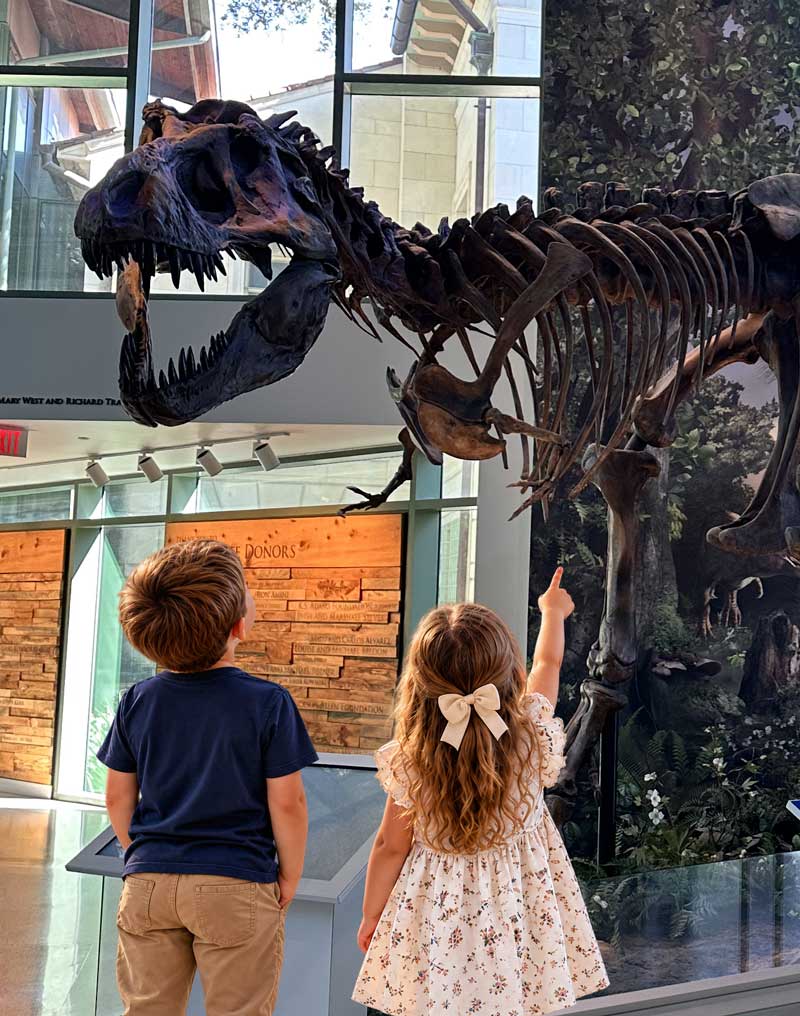
Overhead, a Quetzalcoatlus stretches across the space, introducing young visitors to a prehistoric world.
There are dinosaurs to discover, galleries to explore, and questions to ask.
And there is noise.
Wonderful, enthusiastic noise.
It is a distinction worth celebrating.
Because wonder is not always quiet.
Sometimes it is a child pointing excitedly at something enormous.
Sometimes it is laughter, surprise, or the irresistible need to tell someone what has just been discovered.
For a child visiting a museum for the first time, the experience may become the beginning of a lifelong interest.
For a parent or grandparent standing nearby, it may become a memory they will carry long after the afternoon has ended.
And for the museum itself, those moments represent something essential.
Its future is walking through the doors every morning.
Often carrying a backpack.
And almost certainly asking questions.
The Next Hundred Years
As the Witte celebrates its centennial, its exhibitions offer visitors an opportunity to consider both its history and its future.
There are stories of the people who built and supported the institution, discoveries being made through ongoing research, and exhibitions that explore the traditions connecting Texans across generations.
But the museum's most enduring contribution may be something that cannot be measured by the number of artifacts in its collections or visitors passing through its doors.
It may be the curiosity it inspires.
Dr. Everidge offers a particularly thoughtful observation about the world beyond the museum.
It is a simple statement, but one that feels especially relevant as we consider what the next century might bring.
In our increasingly connected world, we have become remarkably skilled at observing life through a screen.
Yet there is something irreplaceable about standing before an object that has survived thousands of years, encountering an unfamiliar story, or watching a child discover something for the very first time.
These experiences ask us to be present.
To look closer.
To wonder.
And perhaps to recognize that the world still holds extraordinary things we have yet to understand.
For Dr. Everidge, the invitation to return to the Witte is not simply an invitation to revisit the past.
It is an opportunity to experience something new.
To encounter a story of Texas that may be unfamiliar.
To step beyond what we already know.
And to have fun discovering what comes next.
A century ago, the Witte began building a place where Texans could explore the stories of their world.
Today, those stories continue to unfold through the people who walk its galleries, the families who return across generations, and the children whose curiosity may one day shape the institution itself.
Which brings us back to a little girl and her grandmother.
A little girl once entered the Witte holding her grandmother's hand, unaware of what her future would hold, or how deeply her love for this place would take root.
Today, that little girl leads the very museum that first inspired her sense of wonder, ensuring that generations of children who follow will have the opportunity to discover something extraordinary of their own.
Her grandmother planted the seed.
The granddaughter became its caretaker.
And somewhere in between, a century of Texas stories unfolded.